Current-account gap balloons to a seven-year July high
The $8.11 billion shortfall blew past forecasts and was not covered by direct investment inflows.
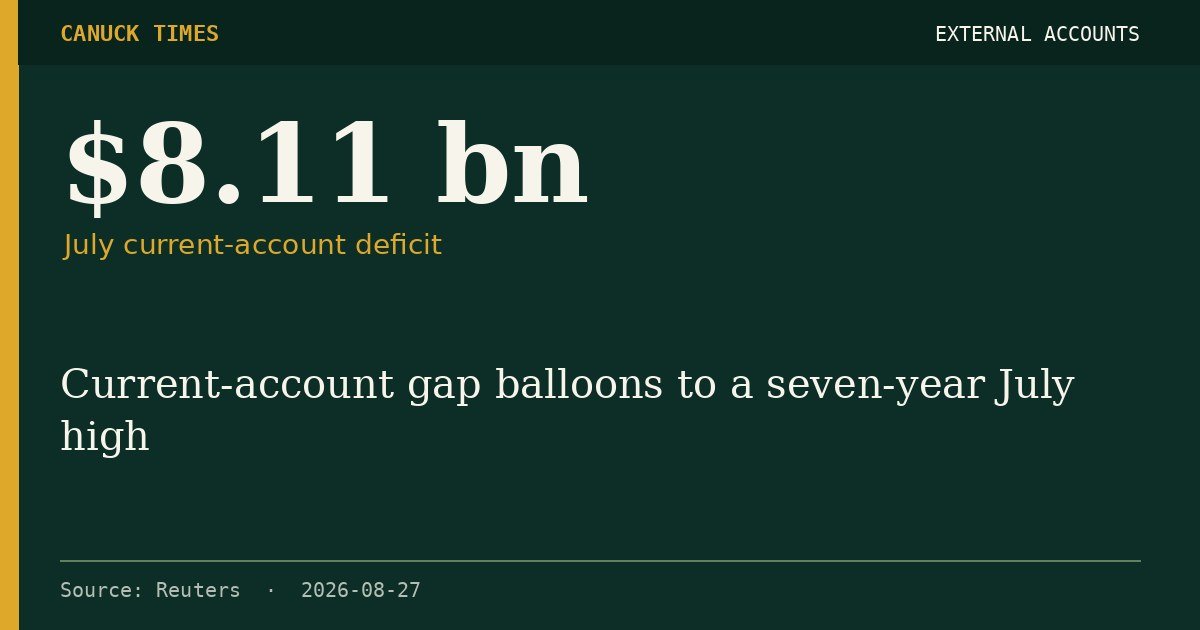
Brazil ran a current-account deficit of $8.11 billion in July, the largest shortfall for the month since 2019 and far wider than economists had expected.
The more uncomfortable detail is the financing. Foreign direct investment, which normally covers the external gap with room to spare, came in below the deficit for the month. That leaves the balance dependent on portfolio flows, which are far more sensitive to interest-rate differentials.
That sensitivity is exactly the tension the central bank faces: it is cutting the Selic while the external position needs high rates to attract capital. The commodity-driven trade surplus offsets some of the pressure, but services and income outflows are doing the damage.
One July print does not make a trend, but it is a number policymakers will be reading closely alongside the inflation data.